
Understanding Varicoceles and Available Treatment Options

A varicocele is a condition that occurs when veins within the scrotum become enlarged, similar to varicose veins that can develop in the legs. While some varicoceles cause few or no symptoms, others may contribute to discomfort, a feeling of heaviness, or fertility concerns.
Varicoceles are relatively common and can affect men of various ages. In many cases, the condition develops gradually and may go unnoticed until symptoms appear or fertility testing is performed.
At the California Men’s Health Institute, we help patients understand varicocele disease and explore treatment options, including minimally invasive procedures such as Varicocele Embolization.
What Is a Varicocele?
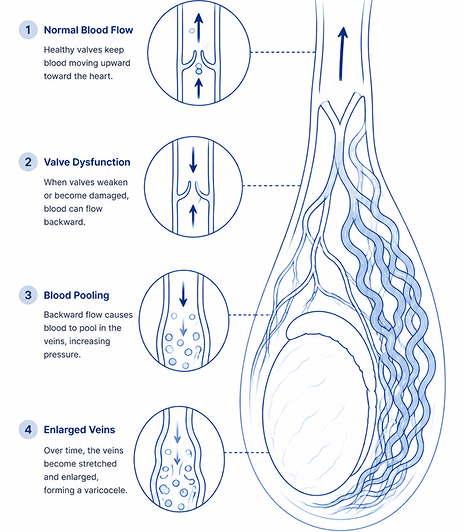
The veins within the scrotum are responsible for carrying blood away from the testicles and back toward the heart. A varicocele develops when these veins become enlarged due to improper blood flow within the venous system.
As blood collects within the affected veins, pressure can increase and the veins may become enlarged or twisted. This often occurs on the left side of the scrotum but can affect both sides in some cases.
Varicoceles are not cancerous, and many men live with them without serious complications. However, for some individuals, the condition can contribute to symptoms that affect comfort and reproductive health.
Common Symptoms of Varicocele Disease
Symptoms can vary from person to person. Some men experience no symptoms at all, while others notice discomfort that becomes more noticeable over time.
Common symptoms may include:
- Dull aching pain in the scrotum
- A feeling of heaviness or pressure
- Enlarged or visible veins within the scrotum
- Discomfort that worsens after standing for long periods
- Symptoms that improve when lying down
- Testicular size differences in some cases
- Fertility concerns
What Causes a Varicocele?
Varicoceles typically develop when the valves within the veins are unable to properly regulate blood flow. As a result, blood may collect within the veins rather than flowing efficiently back toward the heart.
Several factors may contribute to varicocele development, including:
- Venous valve dysfunction
- Increased pressure within the veins
- Anatomical differences in venous drainage
- Age-related vascular changes
Because the condition involves abnormal venous circulation, imaging studies can often help physicians identify the affected veins and determine the most appropriate treatment approach.
How Are Varicoceles Diagnosed?
- Scrotal ultrasound
- Vascular imaging studies
- Fertility evaluation when appropriate
- Review of medical history and symptoms

Treatment Options for Varicocele Disease
When Should You Seek Evaluation?
If you are experiencing persistent scrotal discomfort, a feeling of heaviness, visible enlarged veins, or fertility concerns, a medical evaluation may help determine whether a varicocele is contributing to your symptoms.
Early evaluation can provide clarity about the condition and help you understand whether treatment may be beneficial.
Learn More About Varicocele Treatment
Varicocele disease is a common vascular condition that can affect comfort, confidence, and reproductive health. Fortunately, both surgical and minimally invasive treatment options are available for appropriately selected patients.
At the California Men’s Health Institute, our team provides comprehensive evaluation and minimally invasive treatment options for men seeking answers about varicocele disease.