
Understanding Enlarged Prostate Symptoms and Treatment Options
While BPH is a common part of aging for many men, the symptoms can become frustrating or disruptive if left untreated. Fortunately, several treatment options are available today, including minimally invasive procedures that may help relieve symptoms while allowing patients to avoid traditional surgery.
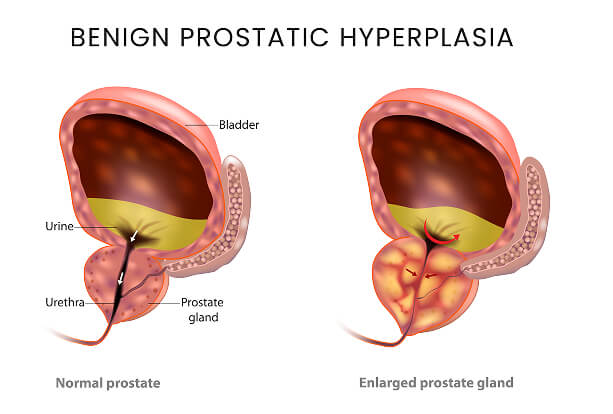
What Is Benign Prostatic Hyperplasia?
With Benign Prostatic Hyperplasia, the prostate gradually enlarges over time. As the gland grows, it can compress the urethra or affect how the bladder empties, leading to urinary symptoms.
BPH is not cancerous, and it does not increase the risk of prostate cancer. However, the condition can significantly affect comfort, sleep quality, and daily activities if symptoms become severe.
BPH is extremely common, particularly among men over the age of 50. Many men will experience some level of prostate enlargement during their lifetime, although symptoms can vary widely from person to person.
Common Symptoms of an Enlarged Prostate
Symptoms of Benign Prostatic Hyperplasia often develop gradually and may worsen over time as the prostate continues to enlarge.
Common BPH symptoms include:
- Frequent urination
- Waking up multiple times at night to urinate (nocturia)
- Difficulty starting urination
- Weak or interrupted urine stream
- Feeling that the bladder is not fully emptied
- Sudden or urgent need to urinate
- Dribbling after urination
In some cases, severe prostate enlargement can also lead to complications such as urinary retention or bladder irritation.
If you are experiencing persistent urinary symptoms, a medical evaluation can help determine whether BPH or another condition may be responsible.
What Causes BPH?
The exact cause of Benign Prostatic Hyperplasia is not fully understood, but it is closely linked to age-related hormonal changes that affect prostate growth.
Several factors may increase the likelihood of developing BPH, including:
-
Aging
-
Hormonal changes in testosterone and estrogen levels
-
Family history of prostate enlargement
-
Certain metabolic or lifestyle factors
Because BPH develops slowly over time, many men may not initially recognize that their symptoms are related to prostate enlargement.

How BPH Is Diagnosed
When evaluating enlarged prostate symptoms, physicians typically review a patient’s medical history, symptoms, and overall health.
Diagnostic evaluation may include:
-
Physical examination
-
Urinary symptom questionnaires
-
Blood tests
- MRI
-
Ultrasound or other imaging studies
-
Additional tests to assess bladder function or urine flow
These evaluations help determine whether symptoms are caused by Benign Prostatic Hyperplasia and allow physicians to recommend appropriate treatment options.
Treatment Options for Benign Prostatic Hyperplasia
Several treatment approaches are available for managing BPH, and the most appropriate option often depends on symptom severity, prostate size, and individual patient preferences.
Many men initially explore treatment with a urologist, which may include:
-
Prescription medications
-
Lifestyle adjustments
-
Minimally invasive procedures
-
Surgical treatments in more advanced cases
In addition to these options, Prostate Artery Embolization (PAE) has emerged as a minimally invasive treatment that will help relieve symptoms caused by prostate enlargement.
PAE is performed using image-guided techniques to target the small arteries that supply blood to the prostate. By reducing blood flow to the enlarged tissue, the prostate may gradually shrink over time, helping relieve pressure on the urinary tract.
When to Seek Evaluation for BPH
At the California Prostate Institute, we help patients better understand Benign Prostatic Hyperplasia and available treatment options, including minimally invasive procedures such as Prostate Artery Embolization. If you are experiencing symptoms of an enlarged prostate, our team is here to provide guidance and help you explore the next steps in your care.